Browse

Log in / Register
 Share
Share
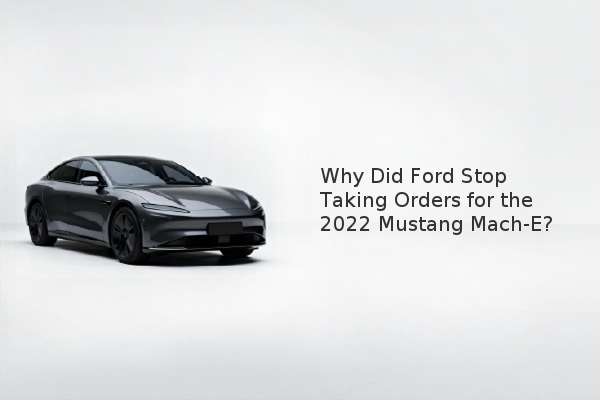
Ford's suspension of 2022 Mustang Mach-E orders is a direct result of unprecedented consumer demand, combined with global supply chain constraints, pushing the automaker to focus on fulfilling existing reservations and retooling for the upcoming 2023 model.
The electric vehicle (EV) market is booming, but this rapid growth presents significant challenges for automakers. In a move that highlights the intense demand for its popular electric SUV, Ford announced in early 2022 that it was no longer accepting retail orders for the model-year 2022 Mustang Mach-E. This decision, while frustrating for some potential buyers, is a strategic response to a sales surge that has outpaced production capacity, particularly amid ongoing parts and labor shortages. This article breaks down the reasons behind the order halt, what it means for shoppers, and what Ford plans next.
The Mustang Mach-E's success is attributed to a powerful combination of strong product specifications, a spike in gasoline prices, and growing consumer interest in electric vehicles. When Ford unveiled the Mach-E, it signaled a bold new direction by applying the iconic Mustang nameplate to an all-electric SUV. The gamble paid off. The vehicle earned critical acclaim for its performance, range, and technology.
Key factors driving its popularity include:
Based on our assessment experience, this confluence of factors created a demand wave that Ford's production lines, already strained by global semiconductor shortages, could not immediately satisfy.
| Model Year & Trim | Key Specification (EPA-Estimated Range) | Market Context |
|---|---|---|
| 2022 Mustang Mach-E California Route 1 (RWD) | 314 miles | High gas prices increased EV appeal |
| 2022 Mustang Mach-E Premium | Up to 303 miles | Critical acclaim and strong reviews |
| 2022 Mustang Mach-E GT | 270 miles (with performance focus) | Growing consumer acceptance of EVs |
For consumers, the order closure means the only way to acquire a new 2022 model is to find remaining dealer inventory, turning attention to the used market or the upcoming 2023 model. The notice on Ford's official order site stated, “Due to high demand, the current model year is no longer available for retail order. Limited inventory may be available at selected dealers.”
This scenario creates a few distinct paths for shoppers:
Ford is executing a significant production strategy shift, dedicating its entire Cuautitlan, Mexico, plant to Mach-E manufacturing and planning a production increase for the 2023 model year to get back on track. This stoppage is not a sign of failure but a recalibration. Prior to this, Ford had ambitious goals, aiming to produce over 200,000 Mach-E units per year by 2023.
To achieve this, the company is making substantial operational changes. According to reports from the Detroit Free Press, Ford has altered its plan to add another electric vehicle to the Cuautitlan facility. Instead, the entire plant will be used for Mustang Mach-E production, which should streamline operations and increase output. A Ford spokesman confirmed that production increases are scheduled for late 2022 on model-year 2023 vehicles. This move is a core part of Ford's broader electrification strategy, which also includes the F-150 Lightning and E-Transit van, and aligns with its long-term goal of achieving carbon neutrality by 2050.
For consumers, the key takeaways are clear: the 2022 Mach-E is essentially sold out, but persistence with dealer inventory or patience for the 2023 model are viable options. Ford's production pause is a short-term setback caused by long-term success, and the company is aggressively retooling to meet the explosive demand for its electric vehicles.