Browse

Log in / Register
 Share
Share
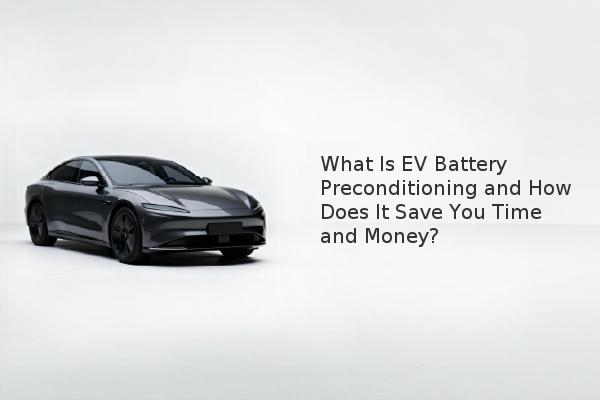
EV battery preconditioning is the process of actively heating or cooling an electric vehicle's battery pack to its ideal temperature range before charging or driving. This simple, automated step is crucial for maximizing charging speed, preserving long-term battery health, and ensuring optimal performance, especially in extreme weather. For EV owners, understanding and using preconditioning is one of the most effective ways to enhance the ownership experience.
Preconditioning prepares the battery for the demands of fast charging or efficient driving by using the vehicle's thermal management system. Most modern EVs have built-in heating and cooling elements for the battery, powered either by the grid when plugged in or by the battery itself when driving.
Think of the battery not as a simple tank of electricity, but as a complex system of chemicals that create electricity through a reaction. This chemical reaction is most efficient within a specific temperature window, generally between 60°F and 95°F (15°C and 35°C). When the battery is too cold, the reaction slows down, severely limiting how quickly it can accept a charge. When it's too hot, the vehicle must slow charging to prevent damage. Preconditioning brings the battery to this "Goldilocks zone" in advance, ensuring it's ready to perform.
The benefits of preconditioning directly address common EV owner concerns: long charging times and battery degradation.
There is no single rule, but strategic use based on your plans and the weather is key. Based on our assessment experience, here are the most effective scenarios.
1. Before DC Fast Charging in Cold Weather This is the classic use case. If you're navigating to a DC fast charger using your EV's built-in navigation, most cars will automatically start preconditioning the battery as you approach the station. The system uses a small amount of battery power to heat the pack, but this is more than compensated for by the dramatically faster charging speeds. Allow roughly 20-45 minutes for the process, depending on the outside temperature and your specific EV.
2. Using Scheduled Departure for Daily Home Charging For daily driving, you can automate preconditioning. If you have a Level 2 home charger, program your car's scheduled departure time along with your desired cabin temperature. The car will then ensure the battery is at the optimal temperature and the cabin is comfortable by your set time. This approach maximizes range and efficiency from the moment you start driving.
3. In Extreme Heat While often associated with cold weather, preconditioning is also valuable in hot climates. If you plan to fast charge on a very hot day, preconditioning can cool the battery, preventing the car from having to reduce charging power to manage temperatures.
A Note on Level 1 Charging: A standard 120-volt household outlet may not supply enough power to both precondition the battery (or cabin) and charge it effectively. In cold weather, the vehicle might even draw from the battery to heat itself, resulting in a net loss of charge.
Interior preconditioning—heating or cooling the cabin while the car is still plugged in—is a major perk of EV ownership. It allows you to enter a comfortable car without using the battery's main charge for climate control. The key advantage is that it uses grid power instead of battery power.
Many EVs allow you to combine battery and interior preconditioning through a scheduled departure time. This is the most efficient strategy: you leave with a full charge, a warm cabin, and a battery ready to deliver maximum range. Some EVs feature a heat pump, which is a highly efficient system for heating the cabin and can significantly reduce the energy penalty of staying warm in winter.
To get the most out of your electric vehicle, make preconditioning a habit. Always use your car's built-in navigation to route to a DC fast charger to trigger automatic battery warming. For daily use, set a scheduled departure time in your vehicle's settings to automate both cabin and battery conditioning. This ensures you start every journey efficiently and comfortably, while also taking a simple step to protect your vehicle's most valuable component—its battery.